MEDICAL TRAVEL FOR HEALTH TREATMENT INDIA

  • Home
  • Treatment
  • Surgeons
  • Hospitals
  • Medical Tourism
  • Contact Us

Friday, 20 September 2019

India’s Youngest Successful Liver Transplantation on a One-Month-Old Baby, Performed at Dr Rela Institute & Medical Centre

 03:05     Dr Rela, Dr. Rela Institute, Liver Transplant, Liver Transplantation, One-Month-Old Baby, Prof Mohamed Rela, Successful Liver Transplant     2 comments   


Dr. Rela Institute & Medical Centre performed India’s first successful liver transplantation on a one-month-old baby on 23rd July in the city. The youngest child to undergo liver transplantation in the country is now doing well and is under the hospital’s postoperative care.
This rare surgery was performed on Aadav (name changed) from Mumbai, who had developed vomiting in the first week of birth, requiring immediate hospitalization. What was believed to be a simple infection, was later diagnosed as urea cycle disorder, which is a metabolic disorder.
When the parents realized that liver transplantation was the only curative treatment option, they shifted the child from Mumbai to Dr. Rela Institute & Medical Centre. The 10-hour long surgery was performed by an expert team of pediatric transplant surgeons and pediatric anesthetists.
Commenting on the first of its kind surgery, Prof Mohamed Rela, Chairman and Managing Director of Dr Rela Institute & Medical Centre, said, “I am glad that a quick diagnosis and timely supportive measures were initiated in mumbai that has prevented the child from having brain damage. The parents took the right decision to let their baby undergo liver transplantation. No centre in India has so far performed liver transplantation on such a young infant.
He added that though metabolic disorders are rare, they are important causes of liver diseases and liver failures in newborns. However, liver transplantation can save them effectively. Though technically difficult neither the weight, nor the age of the baby is a limiting factor.
Talking about the disorder, Dr Naresh Shanmugam, Paediatric Hepatologist and Director for Women & Child Health Department at Dr Rela Institute & Medical Centre, said, “Urea cycle disorder results in high ammonia levels in the blood. The condition refers to the inability of the liver to convert ammonia, which is produced as a byproduct while the body metabolis es proteins, into urea. As the presence of ammonia in the blood increases, it causes swelling in the brain resulting in coma and even death. Immediate action includes stopping protein intake and do dialysis to remove the ammonia. But liver transplantation is the permanent solution.
He added that on average one in 3000 children are born with some form of metabolic disorders in the world. The metabolic disorders can be effectively detected by what is known as the heel prick test, which requires only one drop of blood.
Dr. Ilankumaran Kaliamoorthy, Chairman, Medical Advisory Board at Dr Rela Institute & Medical Centre, said, “Performing liver transplantation in newborn & underweight babies is very challenging. At Dr. Rela Institute, we believe that with our expertise, world-class facilities & infrastructure, age is no barrier for liver transplantation. We have emerged as the largest liver transplant unit performing liver transplantation for a wide age range from newborns to over 70 years old.
Dr. Rela Institute & Medical Centre have the expertise and well-equipped paediatric and newborn intensive care unit to perform complex liver, bone marrow, kidney and intestinal transplant surgeries on babies successfully.

About Dr. Rela Institute & Medical Centre:

Dr. Rela Institute & Medical Centre (RIMC), an International Medical facility, is a quaternary care hospital dedicated to fostering and responding to the needs of a diverse patient population. The hospital provides high quality healthcare with state-of the art infrastructure facilities and experienced, caring medical professionals.
RIMC is designed to provide multi-speciality care with special focus on multi-organ transplantation and critically ill patients. In addition to quaternary care in all specialties, the hospital is committed to providing day-to- day “primary and secondary care” to patients. RIMC has one of the world’s largest dedicated liver intensive care units.
RIMC is a multi-super specialty hospital in a sprawling landscape of 36 acres located in Chromepet, Chennai, Tamilnadu, India.
  • The facility, with 450 beds inclusive of 130 critical-care beds, 14 operating rooms and sophisticated reference laboratories and radiology services, is conveniently located close to road, rail and air transport.
  • RIMC is led and managed by world-renowned doctors who are committed to healthcare.
  • RIMC offers a wide spectrum of clinical care, education and research.
  • RIMC is driven by patient needs, comfort and trust.
Source
Read More
  • Share This:  
  •  Facebook
  •  Twitter
  •  Google+
  •  Stumble
  •  Digg

24-Year old Mumbai student undergoes Heart and Lung Transplant at Global Hospital to conquer a rare and complex Congenital Heart Disease

 02:57     congenital heart disease, Dr Sandeep Attawar, Global Hospital, Global Hospital Mumbai, Heart Transplant, Lung Transplant, Mumbai student, young girl mumbai     1 comment   

Mumbai : A 24 year old Mumbai girl who was suffering from a rare and complex congenital heart disease underwent a combined heart and lung transplant at Global Hospital, Mumbai. Akshara a resident of Panvel, Mumbai suffered from ventricular septal defect since childhood and this defect over the years led to Eisenmenger’s syndrome. Although she was managed medically for a very long time, her condition worsened off late, and she had to be put on home-based oxygen therapy. The 24-year-old underwent a combined heart and lung transplant in the month of June 2019 and is recovering well.


The burden of patients with inoperable adult congenital heart disease and secondary pulmonary hypertension in this country is overwhelming. These individuals have a condition called Eisenmengers syndrome. Many of them continue to turn deeply blue over time and develop secondary complications like cerebral strokes, severe right heart failure, infective endocarditis and die painful deaths after suffering immeasurably.
Dr Sandeep Attawar, Director and Chair of the Heart & Lung Program, Gleneagles Global Hospitals said,“The individuals who have Eisenmengers syndrome could have undergone corrective heart surgery in their infancy or childhood that would have prevented this fate. However, it is only of recent that these facilities have been more common place in this country. So, these individuals that missed the bus, now are condemned to a pathetic existence unless an option such as the replacement of these seriously damaged organs is considered or feasible.”
“However, for the replacement of the seriously damaged organs, there has to be an increase in deceased organ donation,” stated Dr Sandeep.
He also mentioned that there is an uptick in awareness on organ donation and a ray of hope for individuals with this advanced and medically untreatable heart disease.
“The final solution for Eisenmengers syndrome is a heart and double lung transplantation. Akshara is one such young girl who had ventricular septal defect that wasn’t operated upon in her childhood. Heart-lung transplantation is the simultaneous surgical replacement of the heart and lungs in patients having end-stage cardiac and pulmonary disease. It is a viable treatment option,” mentioned Dr Attawar.
Patients who are chosen for the heart and lung transplantation are selected carefully after a series of coordinated and properly sequenced steps. As per  The International Society for Heart and Lung Transplantation, the indications for heart and lung transplant are congenital heart disease with Eisenmenger syndrome followed by idiopathic primary pulmonary hypertension with terminal right heart failure and cystic fibrosis with severe right heart dysfunction.
Akshara’s transplant lasted for 6 –7 hours. Post-surgery she was rehabilitated and was subsequently discharged in mid-July. She has been regularly following up with the clinical team and is recuperating well. Her follow up lung biopsies and levels of immunosuppressive medications are being monitored closely and treated under close medical supervision.
Patient Akshara Aher says,  ” I am thankful to Global Hospital transplant team who have helped me to pursue my dream as a pharmacist & follow her hobby to dance and mountain climbing in her second phase of life.
Dr Vivek Talaulikar, Chief Executive Officer, Global Hospital said, “I would like to thank our doctor teams for their tremendous efforts that they have put in to give Akshara a new lease of life. Till date, Global Hospital, Mumbai, has successfully carried out three bilateral lung transplants, and 1 combined heart and bilateral lung transplant. Our program will offer a safe and caring atmosphere for all patients like all our other organ transplant programs running for decades across India.”
“I would specially thank the donor family who have taken up a brave cause of donating the organs of their loved ones. Today as you see, organ donation has given a new life for this youngster. I would appeal to the communities via the media to come forward and pledge for organ donation,” added Dr Vivek.
Source
Read More
  • Share This:  
  •  Facebook
  •  Twitter
  •  Google+
  •  Stumble
  •  Digg

Thursday, 28 February 2019

Robotic surgery beneficial for urology patients [Sponsored content]

 00:02     advance urology robotic surgery, robotic surgery for urology, robotic urology surgery, urology robotic patient, urology robotic surgery     No comments   

Robotic surgery beneficial for urology patients
source - www.newbernsj.com
Urology-related robotic surgery is a huge benefit to patients who previously would have had to undergo open surgery with its long incisions and long hospital stays, said Dr. Hoyt B. Doak IV of CarolinaEast Urology in New Bern.
“For us that’s a really big deal, to be able to avoid a big open incision,” said Doak, who has been doing robotic surgeries for seven years, with five of those years at CarolinaEast Medical Center.
While surgeons in other specialties could be doing some surgeries robotically, laparoscopically or open, those in urology essentially have only two choices – robotic or open, he said.
“The cases that we do in urology are cases that are mostly just too technically difficult to be done laparoscopically,” Doak said. “They require sewing and fairly complex reconstruction that requires suturing. It is very difficult laparoscopically unless you’re a highly experienced laparoscopic surgeon that doesn’t really do anything else.”
In urology robotic surgery is compared to open surgery for most cases and certainly for the robotic prostatectomy and partial nephrectomy – surgeries for cancer of the prostate and kidney, he said.
The prostatectomy involves removing the prostate, a walnut-sized organ that sits in the very bottom of the pelvis.
“It’s a really very tight space,” Doak said.
If the prostatectomy is done with open surgery, it requires a 4- to 5-inch incision.

About prostate cancer
Other than skin cancer, prostate cancer is the most common cancer in American men. The American Cancer Society’s estimates for prostate cancer in the United States for 2019 are:
• About 174,650 new cases of prostate cancer.
• About 31,620 deaths from prostate cancer.
Risk of prostate cancer
About 1 man in 9 will be diagnosed with prostate cancer during his lifetime.
Prostate cancer develops mainly in older men and in African-American men. About 6 cases in 10 are diagnosed in men age 65 or older, and it is rare before age 40. The average age at the time of diagnosis is about 66.
Deaths from prostate cancer
Prostate cancer is the second leading cause of cancer death in American men, behind lung cancer. About 1 man in 41 will die of prostate cancer.
Prostate cancer can be a serious disease, but most men diagnosed with prostate cancer do not die from it. In fact, more than 2.9 million men in the United States who have been diagnosed with prostate cancer at some point are still alive today.
Source: American Cancer Society
“Visibility down in that space when you’re doing an open prostatectomy is very poor,” he said. “A lot of the surgery has to be done by feel just because you can’t see down there because there’s too much stuff in the way.”
When a prostatectomy is done robotically, a camera is put in through a tiny incision at the belly button, with instruments inserted in similar incisions on either side.
“We can take that camera all the way deep down in the pelvis and see exactly what’s going on down there,” Doak said. “Visibility is excellent. We can see right where the nerves and the blood vessels are that are responsible for potency, for sexual function. We can see the urethra and the bladder. It allows for really good visualization of what’s going on.”
From the patient’s standpoint, he said, the recovery is shorter, the pain is less, the blood loss is less and there is a lower stricture rate.
“In terms of other things that patients care about like erectile dysfunction, urinary continence and that kind of thing, the robot has never been proven to be superior to open surgery,” Doak said.
But a robotic prostatectomy does offer the benefits of minimally invasive surgery.
“Our patients go home the next day instead of spending two or three nights in the hospital and they require very little pain medicine,” he said. “Many of my patients will go home and not require any narcotic pain medicine. They’ll just go home on Tylenol or ibuprofen. I don’t send them home without narcotic pain medicine, but a lot of times they will come back and tell me they didn’t need it at all, or they only took two pills.”
For the kidney cancer surgeries such as the partial nephrectomy, the open alternative is extremely morbid, requiring a large, painful incision, Doak said.
“Those patients used to stay in the hospital for a long time – three, four or five days,” he said. “They used to have to have an epidural for pain control for several days and would get tons of narcotics for pain. It was a really tough surgery to have.”
The benefit of the partial nephrectomy is that it allows the surgeon to remove the part of the kidney that has cancer and leave the rest of the kidney in place.
“A robotic partial nephrectomy allows us to do that with much less morbidity than we used to have to inflict on people,” Doak said. “They have great outcomes. They are able to retain their kidney and they are able to go home sometimes the next day or sometimes after two nights. They are up on their feet, usually, the same night as surgery. It is like night and day from having a big open surgery.”
source
Read More
  • Share This:  
  •  Facebook
  •  Twitter
  •  Google+
  •  Stumble
  •  Digg

Wednesday, 27 February 2019

New Stem Cell Therapy Can Treat Rare Blood Disorders

 23:34     Blood Disorders, Stem Cell Therapy, stem cell therapy treat blood cancer, stem cell treatment Blood Disorders, Treat Rare Blood Disorders     No comments   

New Stem Cell Therapy Can Treat Rare Blood Disorders
SOURCE - valuewalk.com

It’s extremely difficult to treat rare health disorders which can be fatal. However a new, private biotech project aims to change that, after combining CRISPR, a gene-editing tool which is bacteria-derived, and stem cell therapy. Now, this new stem cell therapy will treat the first human patient suffering from a rare blood disorder.
Vertex Pharmaceuticals and CRISPR Therapeutics announced that they are treating a patient who suffers from beta thalassemia, using the new stem cell therapy. The therapy is using CRISPR/Cas9 hematopoietic stem cell therapy, also called CTX001.
According to the press release, the new technique is still in clinical research, but it’s ready enough to treat human patients, yielding good results so far. Using this approach, researchers also want to learn whether they’ll be able to use the same approach to cure sickle cell disease. The clinical study with a human patient will be conducted in the U.S. in mid-2019.
“We have made tremendous progress with CTX001 and are pleased to announce that we’ve treated the first patient with beta thalassemia in this clinical study,” Dr Samarth Kulkarni, Chief Executive Officer of CRISPR Therapeutics, said in the press release. “Treating the first patient in this study marks an important scientific and medical milestone and the beginning of our efforts to fully realize the promise of CRISPR/Cas9 therapies as a new class of potentially transformative medicines to treat serious diseases.”
Scientists need to learn more about the rare blood disorders to be able to treat them efficiently. Beta thalassemia is a blood disorder which is inherited through genetics. People who suffer from this disorder are not able to form enough hemoglobin in their body, which is a protein inside red blood cells and is used for carrying oxygen through the body in the breathing process. Lack of hemoglobin is responsible for many conditions like anemia, shortage of breath and fatigue.
The new stem cell therapy would see researchers take a patient’s hematopoietic stem cells through blood samples and change them by using the CRISPR/Cas9 technology. This would make higher levels of fetal hemoglobin to be produced in the red blood cells.
Fetal hemoglobin is a special kind of hemoglobin which is present in the human body when we are born. However, as a person grows up, it is replaced by an adult form of hemoglobin.
The treated blood cells would then be reinfused back into the bloodstream, with the ability to produce fetal hemoglobin which would hold more oxygen.
“Beta thalassemia and sickle cell disease are serious, life-threatening diseases, and we are evaluating ex vivo treatment with CTX001 with the goal of creating a one-time potential curative therapy,” added Dr David Altshuler, Executive Vice President and Chief Scientific Officer at Vertex. “Our collaboration with CRISPR Therapeutics offers an exciting new potential therapeutic approach that complements our strategy of using scientific innovation to create transformative medicines for serious diseases.”
According to the report in Bloomberg, the new therapy has sparked curiosity and attention in the media since Monday, when it was announced, as well as many other biotech companies working in the same field.
Source
Read More
  • Share This:  
  •  Facebook
  •  Twitter
  •  Google+
  •  Stumble
  •  Digg

Wednesday, 13 February 2019

Football: Napoli blow as Spanish defender Albiol undergoes knee surgery

 23:19     Albiol knee surgery, Albiol knee surgrey in london, Albiol undergoes knee surgery, knee surgery, knee surgery Albiol, Raul Albiol knee surgery     No comments   

Football: Napoli blow as Spanish defender Albiol undergoes knee surgery
source: www.channelnewsasia.com

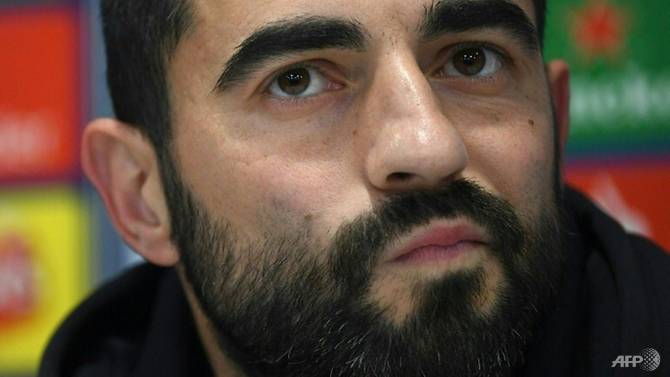
MILAN: Napoli's Spanish international defender Raul Albiol has undergone knee surgery in London, the Serie A club said on Tuesday.

"Raul Albiol underwent surgery to clean the patellar tendon of the left knee this morning at the Princess Grace Hospital in London," the club said in a statement.

"The surgery was perfectly successful. In the coming days, the recovery time will be assessed."
Albiol - winner of the 2010 World Cup and two European Championship titles with Spain - could be sidelined for at least a month, according to reports.

The absence of the charismatic 33-year-old who suffers from tendinopathy to the knee is a blow for Napoli who are second in the Italian league this season - 11 points behind champions Juventus.

The club also begins their Europa League campaign against FC Zurich on Thursday, after dropping out of the Champions League.

Albiol joined Napoli in 2013 from Real Madrid where he won La Liga in 2012.

He also won the UEFA Cup trophy with previous club Valencia in 2004.

source
Read More
  • Share This:  
  •  Facebook
  •  Twitter
  •  Google+
  •  Stumble
  •  Digg
Newer Posts Older Posts Home

Popular Posts

  • Dr. Ashok Rajgopal Get You Back To Stability with Knee Replacement Surgery in India
    Overview: Minimally Invasive Knee Surgery In case you’re one in thousands of people affected by the arthritis or a damage to the knee, and a...
  • 15 Year Old From Iraq Received Cornea Transplant Of Stillborn Infant India
    As a boy growing up in his hometown Iraq, Ammar Ebeid suffered from vision problems due to keratoconus at the tender age of 15. He rece...
  • Bangladeshi Amritambu’s Experience with Multiple Sclerosis Stem Cell Treatment in India
    Amritambu is a businessman who works sixty five-hour work week , loads of works affected his eyes and he started back pain. Then the unt...
  • Zumara Get New Hope After Bilateral Hip Surgery in India
    At the age of 61, Mrs. Zumara Abdulin of Uzbekistan facing pain in her pain and completely relied on a cane even for the little walking. ...
  • Azimoon Mohabir from Guyana Back to Active Life after High Hip Replacement Surgery India
    57-year-old  Mrs. Azimoon Mohabir shares her Hip replacement surgery success stories of the "big leap" from Guyana to India. Hip j...

Categories

100 Years Old Lady Patient 5-year-old Bangladeshi Boy liver transplant advance urology robotic surgery advantages of hip fracture surgery Affordable Cosmetic Surgery India Affordable Radical Prostatectomy India Albiol knee surgery Albiol knee surgrey in london Albiol undergoes knee surgery Arthroscopic Knee Surgery arthroscopic knee surgery recovery Arthroscopy surgery Bangladeshi Boy liver transplant Bangladeshi Patient Stem Cell experience India Best Cancer Doctors Best Cancer Surgery Best Cosmetic Surgery Hospital In India Best Hospitals in India for Ethiopian Patients Best onco surgeon Best Orthopedic Doctor In Mumbai Best Spine surgeons for Rwanda Citizens in India Bilateral Hip Surgery in India Bilateral hip surgery Uzbekistan patient Blood Disorders Boy from Iraq eye Transplant India Cancer Surgery Cost Cardiac Institute cementless implants cementless knee replacement cody Arthroscopic Knee Surgery Cody knee surgery congenital heart disease Cornea Transplant of Iraq patient Cosmetic Surgery Hospital India Cosmetic Surgery India Cost of Radical Prostatectomy India Cost of Stem Cell Therapy India Cure Type 1 Diabetes Diabetes Stem Cell Dr Rela Dr Sandeep Attawar Dr. Mohan Keshavamurthy Email Address Dr. Rajgopal Email Address Dr. Rela Institute Eye Transplant low cost In India Eye Transplant stillborn infant Face Plastic Surgery Cost in India face plastic surgery India Global Hospital Global Hospital Mumbai Heart Transplant hip fracture hip fracture surgery hip fracture surgery benefits hip fracture surgery India Hip Replacement Surgery India hip replacement surgery stories hip replacement surgery success stories hip surgery by Dr Prakash Doshi hospital for special surgery Iraqi boy keratoconus surgery India Jaslok hospital knee and hip transplant Knee Replacement Surgery knee surgery knee surgery Albiol Knee surgery mumbai knee surgery Performed Kokilaben Hospital Mumbai laparoscopic myomectomy cost in delhi Liver Transplant Liver Transplant at Rela Institute Liver Transplant by Dr Mohamed Rela Liver Transplantation Low Cost Laparoscopic Bariatric Surgery in India Low Cost Stem Cell Therapy In India Lung Transplant Mali and Mauritania patients Manipal Hospital Medical Treatment in India for Ethiopia Nationals Medical Visa to India from Ethiopia Multiple Sclerosis Stem Cell Treatment in India Mumbai student One-Month-Old Baby Orthopedic Doctor In Mumbai Orthopedic Specialist Orthopedic Surgery Orthopedic surgery cost Orthopedic surgery cost in India packages for Spine Surgery in India for Rwanda Patient story of Multiple Sclerosis in India Prof Mohamed Rela Radical Prostatectomy Radical Prostatectomy for prostate cancer India Radical Prostatectomy Surgery in India Raul Albiol knee surgery robotic surgery for urology robotic urology surgery robotic-assisted system joint replacement Spine Surgery in India for Rwanda Nationals Stem Cell diabetes Stem Cell India Stem Cell Therapy Stem Cell Therapy Cost India Stem Cell Therapy for diabetes Stem Cell Therapy in India stem cell therapy treat blood cancer stem cell treatment Blood Disorders Stem Cell type 1 diabetes success rate hip surgery in India Success story Multiple Sclerosis in India Success story of hip surgery Successful Liver Transplant Top 10 Face Plastic Surgeons in India Top 10 Orthopedic Surgeons India top cancer treatment Top Knee surgeon Top Orthopedic Hospitals In Mumbai Treat Rare Blood Disorders urology robotic patient urology robotic surgery Urology Surgery in India Uzbekistan lady Hip Surgery Uzbekistan Patient Hip Bilateral India young girl mumbai

Blog Archive

  • ▼  2024 (3)
    • ▼  September (1)
      • Kokilaben Hospital Mumbai: Your Guide to Contacting
    • ►  August (1)
    • ►  May (1)
  • ►  2022 (5)
    • ►  December (2)
    • ►  September (1)
    • ►  June (1)
    • ►  March (1)
  • ►  2021 (4)
    • ►  December (1)
    • ►  November (1)
    • ►  February (1)
    • ►  January (1)
  • ►  2020 (5)
    • ►  November (2)
    • ►  May (1)
    • ►  February (1)
    • ►  January (1)
  • ►  2019 (10)
    • ►  November (2)
    • ►  October (1)
    • ►  September (2)
    • ►  February (5)
  • ►  2018 (3)
    • ►  December (1)
    • ►  November (1)
    • ►  April (1)

Contributors

  • Frances Mays
  • Georgina
  • Kanchan Madan
  • Medical Tourism Consultant

Copyright © MEDICAL TRAVEL FOR HEALTH TREATMENT INDIA | Powered by Blogger